
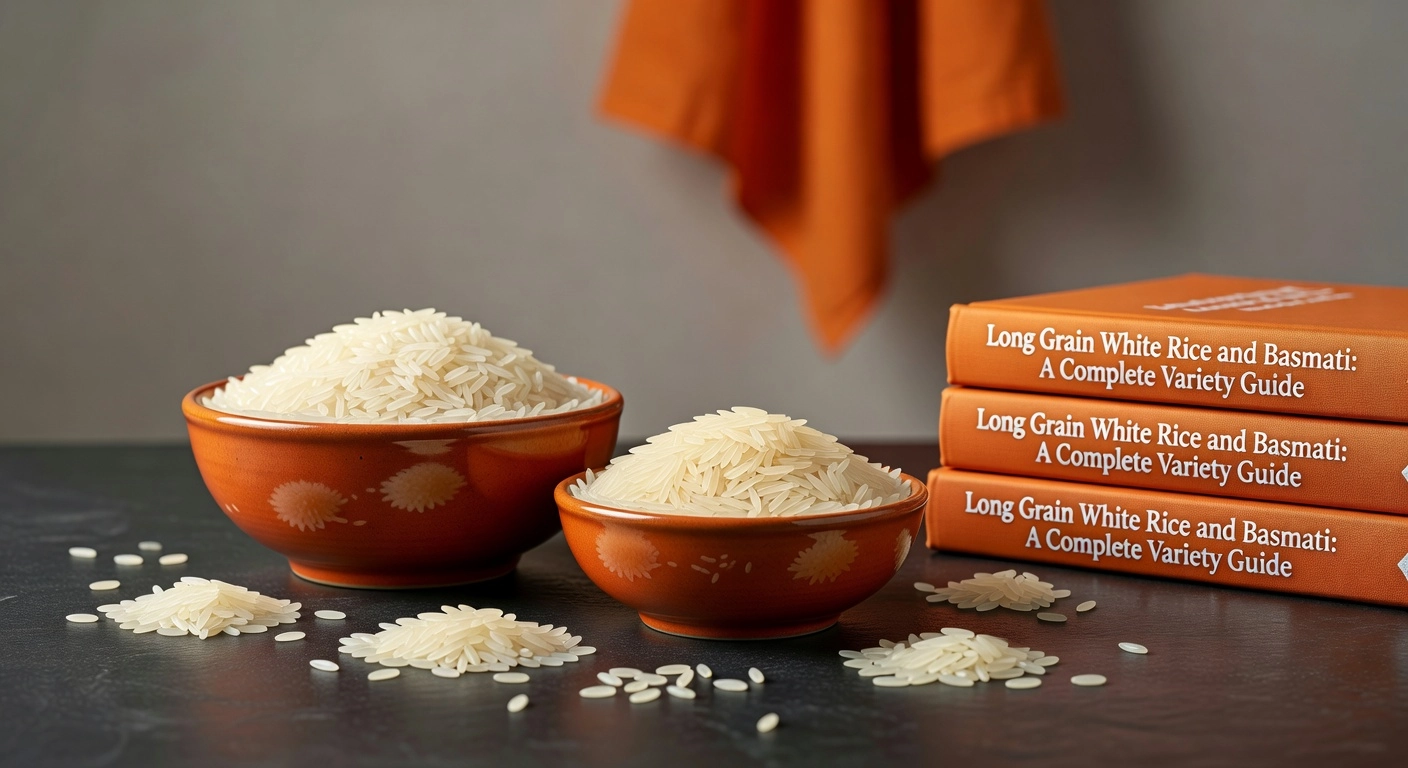
Few ingredients carry as much culinary weight as rice, and within the vast world of rice varieties, long grain white rice and basmati stand out as two of the most widely used and frequently confused options. Whether you are stocking your pantry for the first time or refining your cooking techniques, understanding the distinct characteristics of these two staples can genuinely transform your results in the kitchen.
Long grain white rice and basmati share some obvious similarities, but the differences between them run deeper than most home cooks realize. From grain structure and starch composition to aroma, texture, and ideal cooking applications, each variety brings something unique to the table. Choosing the wrong one for a specific dish can mean the difference between a perfectly fluffy pilaf and a sticky, disappointing result.
In this guide, you will get a thorough breakdown of both varieties, covering their origins, nutritional profiles, flavor characteristics, and best uses. By the end, you will have the knowledge to select the right rice with confidence every single time.
What Makes Rice Long Grain and Where Does Basmati Fit
Rice classification begins with a straightforward physical measurement. A grain qualifies as long-grain when its raw length reaches 6mm or more, with a slender length-to-width ratio that typically falls between 3:1 and 5:1. This geometry is not cosmetic; it directly determines cooking behavior. Higher amylose content in long-grain varieties causes the starch to set firmly during cooking, producing separate, fluffy grains rather than the sticky, cohesive texture associated with shorter varieties.
Basmati rice sits at the premium end of this long-grain spectrum. Standard basmati grains measure between 7.5mm and 8.5mm in their raw state, already placing them well above the baseline classification threshold. The performance difference becomes most dramatic after cooking. Premium 1121 basmati, sourced primarily from designated growing regions in India and Pakistan, elongates to between 15mm and 21mm when cooked, roughly doubling in length while retaining a needle-like slenderness. According to grain classification frameworks used in international trade, this elongation ratio is a defining characteristic that separates true extra-long basmati from generic long-grain alternatives. For an in-depth look at how grain dimensions affect physical performance, published research on the mechanical properties of rice grains confirms that length-to-width ratio directly influences milling yield, breakage risk, and final cooked texture.
The commercial scale of the long-grain category underscores why basmati commands such attention from traders and buyers. Long-grain rice accounts for approximately 52% of the entire global rice market by volume, making it the single dominant category worldwide. Basmati represents the premium driver within that share, distinguished by a volatile aromatic compound called 2-acetyl-1-pyrroline, which produces the signature nutty fragrance that no standard long-grain variety can replicate. Buyers and procurement specialists assess quality through four primary indicators: grain length uniformity across a batch, the slender width ratio, measurable aroma intensity tied to 2-acetyl-1-pyrroline concentration, and a low broken grain percentage that preserves both cooking yield and market value.
The GCC region illustrates how cultural cuisine shapes commodity demand with unusual precision. Dishes like biryani, kabsa, machboos, and pulao are architectural in their construction; each requires grains that remain visually distinct, absorb aromatics without turning mushy, and present with maximum elongation on the plate. These culinary requirements make long-grain aromatic rice, particularly basmati, a functional necessity rather than a preference. The UAE alone imports over 90% of its rice consumption, with 2025 import values reaching US$449 million across a forecast volume of approximately 975,000 metric tons for marketing year 2025/26. India and Pakistan together supply nearly 90% of that volume, primarily through premium basmati grades. As a direct-sourcing operator with procurement roots in both countries, Souq Al Mena is positioned within this supply corridor to deliver authenticated, traceable long-grain basmati to both institutional buyers and retail consumers across the GCC and beyond.
White Basmati vs. Brown Basmati: Why White Dominates MENA Markets
The distinction between white and brown basmati reaches far beyond simple milling preferences, and in MENA markets, that distinction consistently resolves in favor of white. When basmati undergoes full milling, the process strips away the outer bran layer and germ, producing a grain with a cleaner, more delicate flavor profile and a cooking time of roughly 10 to 15 minutes. Brown basmati, retaining its bran intact, requires 30 to 45 minutes of active cooking and introduces oils that accelerate spoilage. The shelf life gap between the two is decisive for bulk traders: white milled basmati maintains quality for 18 to 24 months in airtight ambient storage, while brown basmati's residual bran oils turn rancid within 6 to 12 months, according to comparative shelf stability research on basmati varieties.
The culinary logic of the Gulf region reinforces this processing advantage. Traditional dishes such as kabsa, mandi, and aromatic rice pilafs are built around bold layered spices. Brown basmati's nutty, earthy character competes with those spice profiles rather than complementing them. White basmati functions as a neutral, highly absorbent base, elongating dramatically during cooking, separating into individual fluffy grains, and carrying spice-forward sauces without overpowering them. This functional role is why institutional foodservice operators, including hotel banquet kitchens and large-scale catering companies across the GCC, specify white milled basmati almost exclusively for consistent texture, visual presentation, and reliable bulk storage throughput.
A common misconception positions white rice as nutritionally inferior to its whole-grain counterpart, but white basmati challenges that assumption. Its glycemic index sits at approximately 50 to 58, measurably lower than standard long-grain white rice varieties that register between 64 and 72. The difference is meaningful for health-conscious consumers who want a premium aromatic grain without a sharp blood sugar response. Brown basmati's GI of roughly 52 is marginally lower, but that modest gap rarely justifies the trade-offs in flavor compatibility, cooking complexity, and shortened storage windows that institutional buyers cannot absorb.
The logistics argument becomes even sharper when viewed through the lens of UAE re-export operations. The UAE functions as a central redistribution node, channeling basmati sourced from India and Pakistan onward to GCC neighbors and African markets where cold-chain infrastructure remains inconsistent. As market analyses of the Middle East and Africa basmati sector confirm, white milled rice dominates import volumes, with brown representing a negligible fraction of total trade value. Ambient-stable white basmati can transit multiple handling points, tolerate extended warehouse periods, and arrive at destination markets in viable condition, making it the only commercially practical choice for high-volume cross-border distribution. Souq Al Mena's direct sourcing from Indian and Pakistani mills, combined with sea freight routing through Jebel Ali, capitalizes precisely on this stability advantage to serve both regional retail buyers and institutional procurement desks efficiently.
1121 vs. Pusa vs. 1509 vs. Super Kernel: Which Basmati Is Right for You
Selecting the right basmati variety is a procurement decision with real financial and culinary consequences. Each of the four commercially dominant varieties occupies a distinct position on the price-quality spectrum, and understanding those distinctions separates confident sourcing from costly guesswork.
1121 XXL Basmati sets the global benchmark for premium long-grain white rice. Raw grain length runs 8.3 to 8.5mm, and upon cooking the grain extends dramatically to 22mm or beyond, achieving an elongation ratio close to 2.5 times. This extraordinary visual impact makes it the non-negotiable choice for high-presentation biryani, festive rice dishes, and fine-dining plated portions where every grain must lie separate and proud. At the UAE wholesale level, this prestige commands a price of USD 1,400 to 1,600 per metric ton, the highest tier among all traded varieties. For retailers and hospitality buyers who position quality as a differentiator, the premium is justified by consistent consumer recognition and willingness to pay.
Pusa 1121 Basmati occupies a strategically important middle ground. Developed by India's Pusa Agricultural Institute, the variety delivers grain lengths comparable to, though fractionally shorter than, the XXL grade, while producing aroma intensity that many professional cooks consider even more pronounced. Institutional buyers take notice: APEDA data from November 2025 places the average Indian export price at approximately USD 925 per metric ton, a compelling entry point for buyers who need premium quality at scale without absorbing the full XXL price tier. For central kitchens, hotel banquet operations, and bulk retail packing, Pusa 1121 delivers the aroma profile and elongation performance that premium cooking demands, at a cost structure that protects margins.
1509 Basmati addresses the operational realities of high-volume foodservice. The raw grain is slightly shorter than 1121, typically in the 7.2 to 8.4mm range depending on grade, and aroma registers as medium rather than intense. What 1509 contributes in return is a faster cooking time, roughly 8 to 10 minutes against the longer requirement of 1121, and pricing that typically runs 15 to 30 percent below the 1121 benchmark. For catering operators running large-scale daily production, that combination of speed and cost efficiency is operationally significant without introducing a quality gap visible to the end consumer. The 1121 vs. 1509 basmati comparison guide outlines these cooking performance differences in useful technical detail.
Super Kernel Basmati represents Pakistan's flagship export variety and a distinct aromatic tradition. The grain is slender, averaging around 7.2mm raw and elongating to 16mm cooked, with a floral aroma profile that carries a traditional character preferred by Pakistani households and a broad base of Arab consumers who associate that specific scent with authentic home cooking. Super Kernel competes in UAE retail not solely on specification but on decades of established trade relationships and price positioning that typically runs 5 to 15 percent below equivalent Indian premium grades. For buyers serving diaspora communities or traditional Arab households, this variety's cultural resonance is a sourcing consideration as relevant as any grain measurement. Resources covering basmati rice varieties offer further context on aroma compound profiles across origins.
Quick-Reference Comparison
| Variety | Grain Length Raw/Cooked | Aroma Profile | Broken Grain Tolerance | Aging Requirement | Best Applications | Price Tier | Origin Certification |
|---|---|---|---|---|---|---|---|
| 1121 XXL (Indian) | 8.3-8.5mm / 22mm+ | Strong, classic | 0-5% | 12-24 months | Premium biryani, festive, fine dining | Highest (USD 1,400-1,600/MT wholesale) | GI, India (APEDA) |
| Pusa 1121 (Indian) | ~8.0-8.4mm / strong elongation | Exceptional intensity | 0-5% | 12-24 months | Institutional biryani, bulk retail | Competitive premium (~USD 925/MT) | GI, India (APEDA) |
| 1509 (Indian) | 7.2-8.4mm / good elongation | Medium/mild | 0-5% | 12-16 months | Foodservice, high-volume catering | Value/mid-range | GI, India (APEDA) |
| Super Kernel (Pakistani) | ~7.2mm / 16mm+ | Distinct floral/traditional | 0-2% premium | 12-24 months | Household biryani, Arab/Pakistani cooking | Value-competitive | GI, Pakistan (PSRB/TDAP) |
The decision framework ultimately aligns with your channel and end-use priority. Visual impact and premium retail positioning call for 1121 XXL. Aroma-led institutional volume points toward Pusa 1121. Cost-efficient foodservice throughput favors 1509. Traditional household and Arab market appeal belongs to Super Kernel. Souq Al Mena's direct sourcing from both Indian and Pakistani manufacturers means buyers can access all four tiers through a single supply relationship, with consistent quality control applied at origin rather than left to intermediary handling.
Sella and Parboiled Basmati: The Foodservice Operator's Choice
Among the processing variants that define professional kitchen procurement, sella basmati occupies a category of its own. The production method begins before milling even takes place: raw paddy is soaked, steamed under pressure, and dried while still encased in the husk. This hydrothermal process gelatinizes the starch structure and drives water-soluble nutrients, including thiamine, niacin, and key minerals, from the bran layer deep into the endosperm. The result is a grain that is structurally harder before cooking and dramatically more forgiving during it. In high-volume kitchen environments where a single batch of biryani may serve hundreds of covers simultaneously, the near-zero overcooking risk of parboiled sella basmati is not a convenience feature; it is a core operational requirement.
The Role of Aging in Premium Foodservice Grades
Aging transforms basmati's aromatic profile in ways that no processing shortcut replicates. Paddy or milled grain stored for a minimum of one to two years post-harvest undergoes gradual moisture reduction and biochemical changes that intensify concentrations of 2-acetyl-1-pyrroline, the compound responsible for basmati's signature fragrance. Lower residual moisture also produces the dramatic elongation, sometimes reaching 2 to 2.5 times the raw grain length, that hotel banqueting teams and catering operations associate with premium biryani presentation. Procurement managers at five-star properties across the UAE and Saudi Arabia increasingly write aging specifications directly into supplier contracts, treating it as a measurable quality benchmark rather than a subjective preference.
Golden Sella vs. White Sella: A B2B Comparison
For institutional buyers, the distinction between Golden Sella and White Sella carries real commercial weight. Golden Sella undergoes more intensive parboiling, producing a recognizable amber-gold hue, a firmer bite, superior shape retention through reheating cycles, and a slightly richer aroma profile. It commands a modest price premium and is frequently specified for hotel banquets, airline catering, and export-grade retail packaging where visual presentation matters. White Sella, processed with lighter parboiling and controlled polishing, delivers a pale ivory appearance with a softer, fluffier texture that suits everyday institutional catering, bulk pulao preparation, and cost-sensitive volume accounts. Both sub-categories share the nutritional retention advantages that distinguish parboiled grades from raw milled rice, and both offer meaningfully longer shelf life, typically 18 to 24 months under proper storage conditions.
Logistics Advantages for Sea Freight Importers
The supply chain case for sella varieties extends well beyond the kitchen. Post-processing, sella rice is dried to a stable moisture level of roughly 12 to 14 percent, significantly below the threshold at which mold, fungal growth, and heat-related degradation become active risks. For B2B importers routing bulk shipments through Jebel Ali or Khorfakkan ports, where container transit times and port dwell periods can extend over several weeks, this moisture stability directly reduces spoilage claims and quality disputes. The GCC basmati market, valued at approximately USD 1.64 billion in 2025 and projected to reach USD 1.79 billion by 2034, is increasingly structured around operators who treat sella specification as a logistics risk management decision as much as a culinary one. Souq Al Mena sources sella basmati directly from manufacturing partners in India and Pakistan, enabling precise grade specification and moisture-certified documentation that supports smooth customs clearance across GCC corridors.
India vs. Pakistan: Sourcing Origins and Quality Credentials
When examining the supply architecture behind long grain white rice basmati in the UAE market, two origins dominate with near-complete control. India supplied approximately US$215 million worth of rice to the UAE in 2025, representing roughly 48% of total imports, while Pakistan contributed approximately US$189 million, accounting for around 42%. Together, these two origins command nearly 90% of the UAE's rice import value, which reached a total of US$449 million across all varieties in 2025. Understanding how these origins differ, not just in geography but in certification frameworks, variety profiles, and compliance infrastructure, is essential for buyers making serious procurement decisions. You can review the detailed UAE rice import breakdown by origin for the most current trade figures.
India: GI Protection and Premium Variety Positioning
India's competitive advantage in the basmati segment is anchored by its Geographical Indication certification, a legal protection that restricts the basmati designation to rice cultivated within specific notified growing regions. These regions include Punjab, Haryana, Himachal Pradesh, and Uttarakhand, alongside parts of western Uttar Pradesh, Delhi, and Jammu and Kashmir. This GI framework, enforced through Indian law and recognized in international trade, means that buyers sourcing certified Indian basmati receive documented assurance of authentic regional origin. The flagship export varieties from these regions are 1121 and Pusa, both distinguished by exceptional grain elongation. Upon cooking, 1121 grains can nearly double in length, producing the visually impressive, separate-grain presentation that premium retail and high-volume foodservice buyers in the Gulf consistently prioritize. Aroma intensity is another defining attribute, with the characteristic floral-nutty scent of these varieties being a primary purchase driver across the GCC market.
Pakistan: Super Kernel, PK 386, and PSQCA Standards
Pakistan's basmati production is concentrated in its Punjab province, where alluvial soils between the Ravi and Chenab rivers create growing conditions that produce distinctly aromatic long-grain varieties. The two primary export varieties entering the UAE market are Super Kernel (also traded as Super Basmati) and PK 386. Super Kernel is particularly valued for its intensely floral fragrance and a slightly stickier cooked texture compared to Indian counterparts, a characteristic that suits specific traditional Gulf recipes where some grain cohesion is preferred over strict separation. The Pakistan Standards and Quality Control Authority oversees export compliance, setting phytosanitary benchmarks and quality specifications that align Pakistani shipments with destination-market food safety requirements.
Direct Sourcing, Traceability, and Certification in 2025
The method of procurement from these origins matters as much as the origin itself. Souq Al Mena sources directly from mills and processing facilities in both India and Pakistan, bypassing broker layers that historically added cost and obscured documentation chains. This direct factory access delivers buyers verified certificates of origin, phytosanitary certificates, and food safety compliance records that trace product from farm to shipping container. In the 2025 to 2026 procurement cycle, this level of documentation has shifted from a differentiator to a baseline expectation. Institutional buyers, hotel groups, and premium retailers now routinely require GI compliance confirmation for Indian varieties and PSQCA-aligned quality documentation for Pakistani shipments, alongside clearance records meeting UAE MOIAT and Saudi SFDA standards. Buyers who cannot produce this documentation face increasing barriers at both customs entry and retail listing stages, making origin-verified, directly sourced supply the only credible option for serious market participants.
2025 to 2026 Market Pricing and Supply Outlook for Basmati Buyers
The pricing architecture governing long grain white rice basmati in the current cycle presents a genuinely favorable environment for UAE and GCC buyers with the positioning and procurement discipline to act on it.
According to APEDA's November 2025 monthly rice dashboard, Indian Pusa Basmati FOB export prices averaged approximately USD 925 per metric ton, compared to Pakistan's average of roughly USD 1,034 per metric ton. These figures reflect a meaningful softening from prior peak levels, driven primarily by India's removal of its Minimum Export Price mechanism in September 2024, which released accumulated competitive pressure and allowed Indian exporters to price more aggressively into global markets. For UAE importers, the FOB price represents only the starting point: landed wholesale prices in the UAE typically range from USD 1,400 to USD 1,600 per metric ton, depending on grade specification, packaging format, and the volume commitment structured into the supply agreement. That spread between Indian FOB and UAE wholesale reflects the cumulative cost of sea freight into Jebel Ali or Khorfakkan, customs clearance, sorting, repackaging, and distributor margins on premium grades.
Price Stability Projections and the 2026 Buying Window
The macro supply picture reinforces the pricing softness seen at the FOB level. A joint study by the International Rice Research Institute projects that global rice prices will remain low to stable through 2026, citing India's surplus stocks and the normalization of its export policy as the structural drivers. USDA forecasts support this view, pointing to record global milled rice production of approximately 538.7 million metric tons in the 2025/26 marketing year alongside record trade volumes. For UAE importers, this convergence of ample Indian supply and open export channels creates a procurement window that may not persist into 2027 and 2028, when analysts expect demand-side recovery in key consuming markets to begin tightening the supply-demand balance. Buyers sourcing premium Pusa, 1121, or Super Kernel varieties are well-positioned to lock in forward contracts or volume commitments at current FOB levels before that upward price pressure materializes.
GCC Market Value and the Premiumization Premium
Despite the current softness in commodity-level pricing, the structural value of the GCC basmati market continues to expand. The market is valued at USD 1.64 billion in 2025 and is projected to reach USD 1.79 billion by 2034, according to IMARC Group analysis. That growth trajectory is not primarily a volume story; it reflects premiumization, with institutional buyers, hospitality operators, and retail consumers increasingly specifying extra-long grain varieties, aged basmati, and certified-origin products rather than undifferentiated commodity rice. Saudi Arabia leads regional demand, with the UAE and Kuwait following closely, and foodservice sector expansion across all three markets continues to drive specification-grade procurement volumes upward.
The UAE Re-Export Premium: Cost vs. Distribution Advantage
The UAE's role as the region's dominant rice re-export hub shapes pricing logic in a way that pure FOB analysis cannot capture. With 975,000 metric tons of rice imports forecast for marketing year 2025/26, the UAE positions itself not merely as an end consumer but as the redistribution backbone for GCC neighbors and East African markets. Accessing that distribution infrastructure through verified UAE import channels carries a trade hub premium of roughly 15 to 25 percent above pure FOB sourcing costs. For B2B buyers evaluating direct-origin sourcing versus UAE-based intermediaries, that premium buys unmatched logistical reach, free-zone inventory flexibility, and the financial services infrastructure that Jebel Ali and Khorfakkan corridors provide. Souq Al Mena's direct procurement relationships with Indian and Pakistani producers, combined with sea freight access into both ports, are structured precisely to convert that premium into a distribution advantage rather than a pure cost burden.
Buying Guide for B2C Consumers and B2B Bulk Importers
For B2C Retail Buyers: Reading Labels Like a Professional
Retail buyers navigating the premium basmati shelf face a genuine information challenge. Packaging carries meaningful signals, but only buyers who know what to read can act on them confidently. The most important indicator is variety designation: look explicitly for 1121 or an XXL/extra-long grain label, as these signal a raw grain length of 8.3mm or more, which elongates to 20mm or beyond when cooked. This elongation is what delivers the visually impressive, separated grains that define a proper biryani or pilaf presentation.
Aging statements represent the second critical checkpoint. Premium long grain white rice basmati intended for biryani should carry a 1 to 2 year aging declaration on the pack. Aged rice has lower moisture, firmer texture, and significantly more pronounced aroma than fresh-crop stock, because natural aging concentrates the 2-acetyl-1-pyrroline compounds responsible for basmati's signature fragrance. New-crop rice, even from premium varieties, cooks softer and absorbs less water, which produces a mushier result in high-heat cooking applications.
Certification marks complete the verification picture. For Indian-origin rice, FSSAI authorization confirms the product meets food safety and labeling regulations. For Pakistani varieties like Super Kernel or PK-386, PSQCA certification verifies that hygiene, quality, and export standards have been met at source. Third-party APEDA registration adds another layer of traceability for Indian origin claims. Any pack that omits variety name, origin, aging status, or regulatory certification warrants caution, because blended or mislabeled rice is a genuine market reality.
For B2B Institutional Buyers: Technical Specifications That Protect Margin
Institutional procurement decisions in the basmati category hinge on measurable quality tolerances rather than packaging aesthetics. The foundational metric is broken grain percentage: premium export-grade basmati should register below 2% broken grains, ideally under 1%. Higher broken percentages reduce cooking yield, create starchy cooking water, and compromise plate presentation in HORECA settings. Any specification sheet that omits this figure is incomplete for serious procurement purposes.
Moisture content must not exceed 12.5% at the point of shipment. Rice loaded above this threshold risks mold development, insect activity, and quality degradation during the 10 to 18 day sea freight transit from Indian ports such as Mundra or JNPT, and Pakistani ports including Karachi, to Jebel Ali. Buyers should insist on laboratory moisture certificates from accredited third-party inspectors rather than relying solely on supplier declarations.
Minimum order quantities for economical container-load sea freight typically fall between 20 and 25 metric tons per 20-foot container. Uniformity tolerances covering admixture percentages, discolored grain counts, and average raw grain length should be written explicitly into purchase agreements. Sorting specifications, whether sortex-cleaned or double-sortexed, affect visual grade and should align with the buyer's end customer requirements.
For UAE-Based Re-Exporters: The GCC Infrastructure Advantage
Re-exporters operating from the UAE occupy a structurally advantageous position in the GCC rice distribution chain. The GCC Harmonized Customs Tariff framework enables goods cleared into the UAE to transit onward to Saudi Arabia, Oman, Kuwait, and Bahrain with streamlined customs procedures. Free zone infrastructure at Jebel Ali supports bonded storage, repackaging, and consolidation without triggering UAE import duties on goods destined for re-export, a meaningful cost lever on large-volume agricultural commodity flows.
The India-UAE Comprehensive Economic Partnership Agreement further supports preferential treatment for compliant Indian-origin rice shipments. Efficient customs clearance depends on complete documentation: certificates of origin, phytosanitary certificates, Halal certification where destination markets require it, and accurate HS code classification under the GCC unified tariff. Re-exporters who maintain these documentation standards consistently experience materially faster port release and fewer compliance delays.
Payment Structures and Logistics for Bulk Orders
Bulk buyers typically negotiate under either FOB or CIF pricing structures. FOB transfers freight and insurance responsibility to the buyer at the origin port, giving experienced importers direct control over shipping rates and carrier selection. CIF pricing, where the seller arranges freight and insurance to the destination port, suits buyers seeking simplified cost structures or those newer to direct South Asian sourcing.
Payment terms in South Asian rice trade conventionally follow Letter of Credit (LC) or Telegraphic Transfer (TT) structures. Irrevocable confirmed LCs protect both parties in high-value transactions, while TT arrangements, typically structured around bill of lading milestones, suit established trading relationships with proven counterparties.
Souq Al Mena addresses both buyer categories directly through its dual-channel model. Its institutional trading desk maintains direct factory relationships in India and Pakistan, enabling B2B buyers to access bulk supply with verified specifications and competitive pricing. For buyers requiring smaller quantities or faster fulfillment, souq-mena.com offers retail-ready B2C SKUs with GCC delivery within 1 to 23 days and coverage across Western markets including the USA, UK, and Canada within 9 to 25 days, combining sourcing depth with distribution reach in a single trading partner.
How to Cook Each Basmati Variety Perfectly for Gulf Dishes
Translating variety knowledge into consistent results requires matching each grain type to the cooking method it was essentially engineered for. The five major commercial varieties behave meaningfully differently under heat, and Gulf dishes are unforgiving of wrong water ratios or skipped preparation steps.
1121 XXL Basmati for Biryani
For biryani, 1121 XXL demands the most deliberate preparation of any variety, and the results justify every step. Soak rinsed grains for 30 to 45 minutes to fully hydrate the starch and prime the grain for maximum elongation. Parboil using a 1:1.5 water ratio until the rice reaches roughly 70 to 75 percent doneness, still firm at the core. Drain immediately, then layer over spiced meat with saffron-infused milk and seal the vessel tightly for dum cooking on low heat for 20 to 25 minutes. This sealed-steam finish drives the grain to its full length while infusing layered aromatics into each separate grain without any mushiness.
Pusa 1121 for Kabsa and Machboos
Pusa 1121 suits the Saudi and Gulf one-pot tradition of kabsa and machboos particularly well. Its lower surface starch means a shorter 20-minute soak is sufficient before cooking. Use a 1:1.75 water ratio with saffron-infused broth and whole spices including cardamom, cinnamon, and cloves added directly to the cooking liquid. The grain absorbs spiced cooking juices completely while each grain remains visually distinct and fluffy, which is the textural signature that defines an authentic machboos.
1509 Basmati for Pulao and Pilaf
For everyday institutional or household pulao, 1509 basmati delivers the fastest throughput among premium varieties. A 20-minute soak followed by a 1:1.6 water ratio and approximately 15 minutes of absorption cooking produces reliably consistent results across large batches, making it the practical default for catering operations running high-volume pulao service.
Super Kernel for Household Spiced Rice
Super Kernel performs best with a 30-minute soak and a 1:1.7 water ratio. It produces a slightly more cohesive grain texture compared to 1121, which holds structural integrity in spiced dishes loaded with vegetables and braised meat without becoming sticky or clumping.
Sella/Parboiled Basmati for Events
Sella basmati requires no soaking and a generous 1:2 water ratio to rehydrate its pre-gelatinized starch. The grain is virtually impossible to overcook and maintains full separation and integrity for two to three hours in warming trays, which is precisely why large-format Gulf hospitality operations specify it as their standard for buffets and banquet service.
Nutritional Advantages of Basmati Over Standard Long Grain White Rice
The nutritional distinction between basmati and standard long-grain white rice is measurable, meaningful, and increasingly relevant to health-conscious buyers across the UAE and GCC.
Glycemic Index: A Significant Practical Gap
White basmati rice carries a glycemic index of approximately 50 to 58, placing it firmly in the low-to-medium GI range. Standard long-grain white rice registers between 64 and 72, a classification that puts it solidly in medium-to-high territory. This gap has direct implications for consumers managing blood sugar levels, following diabetic meal plans, or simply seeking steadier energy release throughout the day. The primary structural reason is amylose content: basmati contains roughly 25 to 30% amylose, compared to around 20 to 25% in conventional long-grain white varieties. Amylose digests considerably more slowly than amylopectin, producing a gentler and more gradual rise in blood glucose. For GCC consumers navigating one of the world's highest regional rates of Type 2 diabetes, this distinction carries genuine dietary weight.
Aroma Chemistry and Portion Satisfaction
The compound 2-acetyl-1-pyrroline, present naturally in basmati at harvest and intensified through aging, is entirely absent or negligible in standard long-grain white rice. This molecule produces basmati's signature nutty, popcorn-like fragrance, a sensory cue that signals quality before the first bite. From a behavioral nutrition standpoint, this matters: a more aromatic, satisfying eating experience supports mindful consumption and can reinforce natural portion discipline without caloric restriction feeling forced.
Resistant Starch in Cooled Preparations
Basmati's higher amylose content creates another downstream advantage. When cooked basmati is cooled and stored, starch retrogradation converts a meaningful portion of digestible starch into resistant starch, effectively lowering the glycemic impact of the same portion by an estimated 10 to 15 GI points. This makes basmati particularly well suited to pre-prepared meal formats, rice salads, and leftover-based eating patterns common in modern GCC households.
Protein and Amino Acid Profile
Premium aged basmati also edges ahead on protein content, with dry-weight figures reaching 7 to 8% and cooked servings delivering approximately 4 grams per cup alongside a complete essential amino acid profile. These margins over standard long-grain white rice, while modest, support premium pricing in retail and align with the health-conscious positioning that wellness-driven buyers increasingly expect.
Alignment with Souq Al Mena's Wellness Narrative
This nutritional profile integrates directly with Souq Al Mena's nutraceuticals and health and wellness e-commerce vertical at souq-mena.com. For UAE and GCC consumers who already engage with dietary supplements and bio-diagnostic products through the platform, premium basmati becomes a natural dietary companion rather than a standalone grocery item, reinforcing a coherent, integrated wellness narrative across product categories.
Why Traceability and Certification Matter When Sourcing Basmati in 2025
Authenticity in basmati procurement starts with a piece of paper, and in 2025, that paper trail has never carried more commercial weight. Geographical Indication certification from India, administered through APEDA, and domestic GI protections recognized under Pakistan's framework serve as the primary markers that separate genuine basmati from non-basmati long-grain substitutes that enter commodity supply chains through blending or mislabeling. These certifications confirm origin, variety characteristics, aroma compounds, and grain elongation ratios, providing buyers with verifiable evidence that what they are purchasing is not a visually similar substitute passed off as premium stock. Without these credentials, buyers in competitive import markets like the UAE have limited recourse when grain quality fails to match label claims.
Regulatory compliance is equally non-negotiable for GCC market access. UAE MOIAT and Saudi SFDA import frameworks require every rice consignment to arrive with a complete documentation package: valid phytosanitary certificates confirming pest and disease-free status, certificates of origin, certificates of conformity with GSO technical standards, and laboratory test reports verifying pesticide residue levels and contaminant thresholds. Saudi SFDA applies these requirements rigorously under its food clearance conditions, and shipments that arrive with incomplete documentation face rejection, quarantine, or destruction at port. For importers managing sea freight volumes through Jebel Ali or Khorfakkan, a single compliance failure can translate into significant demurrage costs and supply disruptions that cascade through institutional buyer contracts.
Traceability is shifting from a compliance checkbox to a procurement specification in its own right. Airlines, hospital catering groups, hotel chains, and large retail buyers are now attaching supplier documentation requirements to their tender specifications, requesting batch-level traceability, farm-origin records, and certification history alongside price and grain-length data. This trend is accelerating through 2025 and into 2026 as premiumization raises buyer expectations across the GCC basmati segment, currently valued at USD 1.64 billion.
Sourcing directly from verified suppliers in India and Pakistan, as Souq Al Mena does through its direct factory procurement model, eliminates the chain-of-custody gaps that accumulate across multi-tier broker networks. Each additional intermediary in a supply chain introduces a point where documentation can be lost, altered, or omitted. Direct importer-to-manufacturer relationships preserve the complete paper trail from origin certification through export documentation to GCC customs clearance, giving institutional and retail buyers a coherent traceability record they can present to auditors or regulators.
Eco-conscious sourcing is the newest dimension entering total cost of ownership calculations for premium basmati. Forward-thinking buyers are beginning to weigh the carbon footprint difference between sea and air freight, with bulk sea freight via Jebel Ali representing significantly lower per-tonne emissions than air shipment. Sustainable farming certifications, water stewardship credentials, and biodegradable packaging options are appearing in procurement specifications, particularly for buyers supplying green-certified hotels or sustainability-focused retail chains. Souq Al Mena's commitment to minimized biodegradable packaging and its broader eco-commerce integration positions it to meet these emerging requirements as they move from differentiator to baseline expectation.
Sourcing Long Grain White Basmati Through Souq Al Mena
Souq Al Mena's position in the long grain white rice basmati supply chain begins at the origin, not the warehouse. Through direct relationships with verified mills and suppliers in India and Pakistan, the company bypasses the broker layers that typically inflate landed costs for GCC buyers. That direct access translates into competitive per-metric-ton pricing across the full premium variety range, including 1121 XXL, Pusa Basmati, 1509 XXL, and Super Kernel. Each variety comes with full traceability documentation, supporting the certification requirements that institutional buyers increasingly treat as non-negotiable in 2025 procurement cycles. With India and Pakistan collectively accounting for approximately 90% of UAE rice imports by value, sourcing discipline at the origin level determines competitive advantage across the entire supply chain.
The dual B2B and B2C model creates a structural advantage that benefits every buyer category simultaneously. Institutional clients engaging the bulk trading desk and retail consumers ordering packaged SKUs draw from the same verified supply chain, which means neither segment subsidizes the other through markup layers. A hotel procurement team negotiating a multi-ton 1121 XXL contract and a household buyer ordering a retail-ready bag through souq-mena.com access equivalent product quality without the pricing distortions that typically separate wholesale and consumer channels.
Regional fulfillment spans the full GCC corridor, covering UAE, KSA, Oman, Bahrain, and Kuwait with delivery windows of 1 to 23 days through land networks and automated customs clearance channels. The UAE hub also supports re-export logistics, making Souq Al Mena a practical sourcing node for regional distributors serving secondary markets.
Compliance infrastructure removes the administrative friction that often delays cross-border grain procurement. GCC Harmonized Customs Tariff utilization, SFDA documentation support for Saudi buyers, and MOIAT-aligned import credentials keep institutional shipments moving without procedural bottlenecks.
B2B buyers can engage the institutional trading desk directly to discuss bulk quantities, minimum order thresholds, and customized packaging specifications suited to their operational requirements. B2C shoppers access retail-ready basmati SKUs through souq-mena.com, supported by multi-currency pricing and regional payment options including Mada, KNET, Benefit, and Apple Pay for seamless checkout across GCC markets.
Frequently Asked Questions About Long Grain White Rice and Basmati
Is Basmati Rice the Same as Long Grain White Rice?
Basmati is not identical to generic long grain white rice, though it belongs within that broader family. The critical distinction lies in three factors: geographic origin protected by Geographical Indication status, a unique aromatic compound called 2-acetyl-1-pyrroline that produces basmati's signature fragrance, and exceptional elongation during cooking where grains can nearly double in length while remaining separate. Standard long grain white rice lacks this GI protection, consistent aroma profile, and reliable elongation behavior. Basmati is best understood as a premium, narrowly defined subcategory within the long-grain white rice classification, not a synonym for it.
Which Basmati Variety Is Best for Biryani?
For biryani, 1121 XXL and aged Pusa 1121 stand above all other options. These varieties deliver raw grain lengths exceeding 8.3 mm, extreme post-cooking elongation, and a non-sticky texture that holds structural integrity through prolonged cooking with dense spices, fats, and meat. The aroma intensity of aged 1121 also survives high-heat dum cooking, which shorter-aged or milder varieties like 1509 cannot consistently match. Foodservice operators and home cooks across the GCC consistently specify these two varieties for premium biryani preparation.
What Is the Price of Basmati Rice in the UAE in 2025?
UAE wholesale basmati prices in 2025 ranged from USD 1,400 to 1,600 per metric ton, varying by variety, grade, and packaging specifications. Indian Pusa Basmati FOB export prices were considerably lower, averaging approximately USD 925 per metric ton in November 2025, reflecting the margin absorbed by freight, port handling, and local distribution through Jebel Ali. Ramadan demand cycles and harvest quality both introduce seasonal price movement, so buyers committing to large volumes benefit from forward planning.
What Is the Difference Between Sella and Raw Basmati?
Sella basmati undergoes soaking and steaming inside the husk before milling, which hardens the grain structure, extends shelf life, reduces starch surface stickiness, and produces a firmer texture that resists breaking under prolonged heat. Raw basmati skips this parboiling step entirely, delivering a brighter white appearance, softer cooked texture, and a stronger natural aroma. Raw basmati suits home cooking where freshness and fragrance are priorities; sella is the preferred specification for hotels, catering operations, and high-volume foodservice where consistency under stress matters more than aromatic intensity.
How Do I Source Basmati in Bulk for the UAE or GCC Market?
Bulk sourcing requires a structured qualification process before any volume commitment. Work with a direct importer maintaining verifiable mill relationships in India and Pakistan, and request phytosanitary certificates alongside the certificate of origin for every shipment. Specify acceptable broken grain percentage, typically under 5%, and confirm moisture content falls within the 12 to 14% range to prevent storage degradation. Verify that all documentation meets GCC customs compliance standards, including SABER requirements for Saudi Arabia-bound shipments. Souq Al Mena's institutional trading desk sources directly from Indian and Pakistani factories with full documentation chains, making it a structured entry point for buyers seeking compliant, verified bulk basmati supply into the UAE and broader GCC corridor.
Key Takeaways for Basmati Buyers in the UAE and GCC
Five decisions separate a confident basmati buyer from an expensive procurement mistake. First, match your variety to the dish: 1121 XXL delivers the elongation and aroma premium biryani demands, Pusa serves cost-sensitive institutional kitchens without sacrificing dependability, 1509 handles everyday household cooking efficiently, and Super Kernel remains the trusted choice for traditional Gulf preparations like kabsa and machboos. Second, the 2025-2026 pricing window is genuinely favorable; with Pusa export prices holding near USD 925/MT and IRRI projecting continued price stability into 2026, B2B buyers should initiate forward contract negotiations now rather than waiting for market shifts. Third, always demand GI certification, phytosanitary documentation, and verified broken grain percentages before finalizing any bulk commitment, regardless of sourcing channel or supplier reputation. Fourth, retail buyers should reject generic basmati labels and specifically seek 1121 or XXL designations alongside aging declarations to ensure consistent results in Gulf cooking. For bulk B2B inquiries or direct retail purchases, contact Souq Al Mena or browse premium long grain white basmati SKUs sourced directly from India and Pakistan at souq-mena.com.
Conclusion
Understanding the difference between long grain white rice and basmati is one of those small but meaningful upgrades that pays off every time you cook. To recap the essentials: long grain white rice offers versatility and neutral flavor, making it ideal for everyday dishes; basmati brings aromatic depth and a fluffy, distinct texture perfect for biryanis, pilafs, and fragrant cuisines. Their starch compositions differ significantly, which directly affects texture and cooking results. Choosing the right variety for the right dish is not complicated once you know what sets them apart.
Now it is time to put this knowledge to work. Stock both varieties in your pantry, experiment with your favorite recipes, and notice the difference firsthand. Small, informed choices in the kitchen lead to consistently better meals. Your rice dishes will never be the same again.