
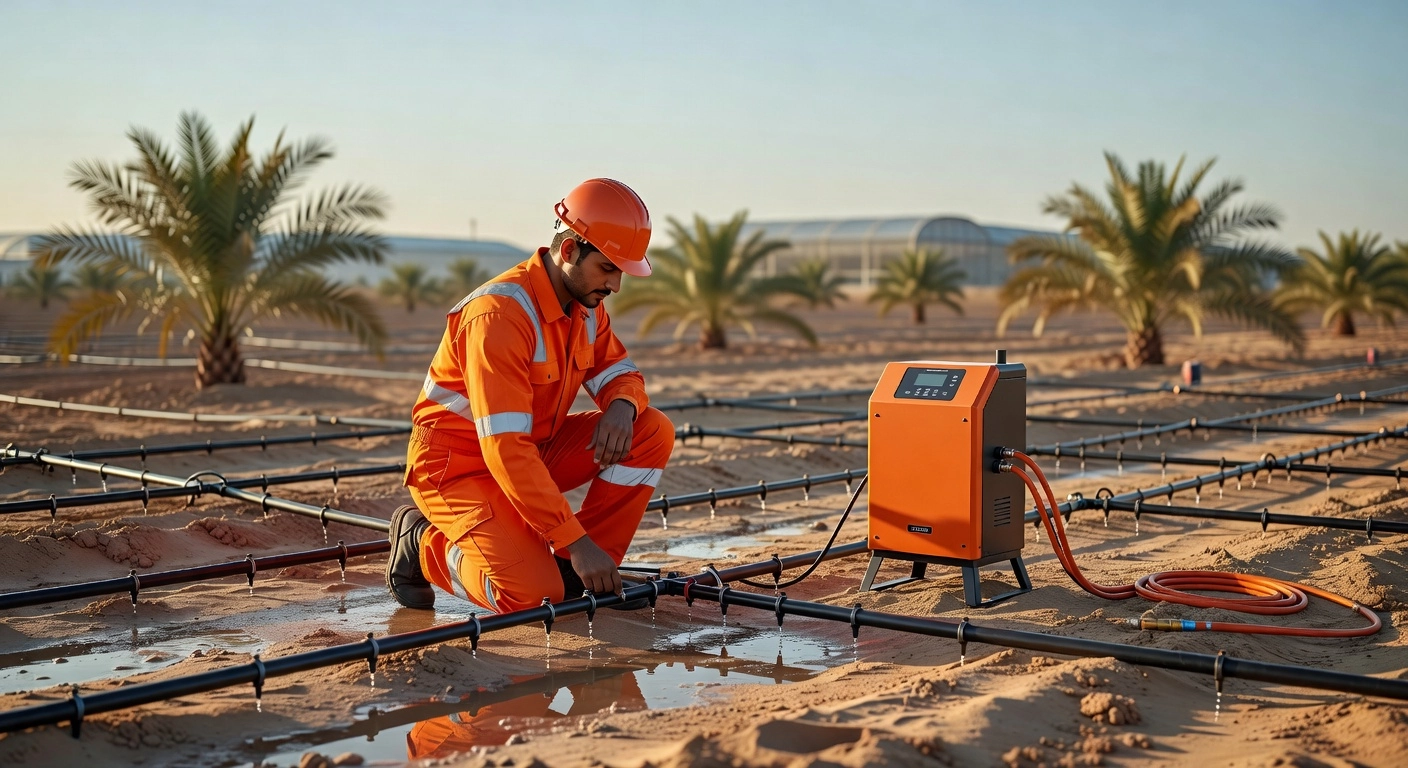
Water scarcity is one of the most pressing challenges facing agriculture and landscaping in the UAE, where annual rainfall averages a mere 100 millimeters. Yet farms, gardens, and green spaces continue to thrive across this arid landscape, and much of that success comes down to one critical technology: precision irrigation.
If you are exploring a drip irrigation system in the UAE, you are already thinking in the right direction. These systems deliver water directly to the root zone of plants, reducing waste by up to 50% compared to traditional flooding or sprinkler methods. In a region where water conservation is both an environmental responsibility and a regulatory priority, choosing the right system is not simply a purchasing decision; it is a strategic investment.
This guide is designed for buyers who already understand the basics and are ready to make informed, confident choices. You will find a thorough breakdown of system types, key components, supplier considerations, and cost factors specific to the UAE market. By the end, you will have the analytical framework needed to select a drip irrigation solution that performs reliably in the Gulf's demanding climate.
Why UAE Conditions Make Drip Irrigation Essential
The UAE ranks among the most water-stressed nations on Earth, receiving fewer than 100mm of annual rainfall in most regions, with arid zones like Abu Dhabi averaging as little as 46mm per year. Evaporation rates, by stark contrast, exceed 2,000mm annually in many areas, creating a chronic hydrological deficit that no conventional irrigation strategy can sustainably bridge. Groundwater, which historically meets over 70% of Abu Dhabi's total water needs, is being extracted far faster than natural recharge allows. Across agricultural zones in Abu Dhabi and Al Ain, aquifer levels are declining at an accelerating pace, with projections suggesting freshwater reserves could face critical depletion within decades at current withdrawal rates. For commercial agricultural operators, this trajectory makes water efficiency not a preference but a structural imperative. You can explore the scale of groundwater depletion in the UAE to better understand the long-term pressure on farming viability.
Compounding this scarcity challenge is the nature of UAE soils themselves. Desert sands dominate the agricultural landscape, characterized by extremely low water-holding capacity and percolation rates that can reach hundreds of centimeters per hour. Under traditional flood irrigation methods, a significant portion of applied water drains beyond the root zone entirely before crops can absorb it. Spray systems perform only marginally better. A properly configured drip irrigation system for UAE landscaping and agriculture counters this directly by delivering water through emitters precisely at the root zone, eliminating surface runoff and minimizing deep percolation losses altogether.
Summer temperatures routinely surpassing 40°C introduce a further layer of inefficiency for surface and overhead irrigation methods. Open channels, exposed soil surfaces, and airborne spray all suffer intense evaporative losses during peak heat, with surface watering methods operating at up to 50% reduced efficiency compared to subsurface or root-zone delivery. Drip systems sidestep this loss mechanism almost entirely by keeping water application localized and shielded from direct solar exposure.
The efficiency differential is decisive. Research on drip irrigation performance in arid environments consistently demonstrates water use efficiency of 90 to 95% for drip systems, compared to 40 to 60% for flood methods and substantially lower figures during high-heat conditions. Drip systems also consume approximately 25% less water than conventional spray systems while maintaining or improving crop yields, making them the only technically viable path to long-term agricultural productivity in hyper-arid conditions.
Policy frameworks are now reinforcing what environmental reality already demands. The UAE Water Security Strategy 2036 and the National Food Security Strategy 2051 both position efficient irrigation as a core pillar of national resilience. Groundwater conservation mandates from the Ministry of Energy and Infrastructure are shifting efficient irrigation from an optional cost-saving measure into a compliance expectation for commercial operators. For businesses supplying agricultural infrastructure across the MENA region, this regulatory momentum signals sustained and expanding demand for precision water delivery systems engineered specifically for the region's extreme conditions.
UAE Drip Irrigation Market: Growth, Demand Drivers, and Opportunity
The commercial case for investing in a drip irrigation system UAE infrastructure has never been stronger, and the market data confirms what on-the-ground demand already signals. According to Grand View Research's UAE drip irrigation market outlook, the UAE market was valued at USD 48.3 million in 2025 and is projected to reach USD 128.8 million by 2033, advancing at a compound annual growth rate of 13.3%. That trajectory places the UAE among the fastest-expanding irrigation markets globally, a distinction earned through the convergence of acute water scarcity, aggressive sustainability policy, and accelerating agritech investment.
Zooming out to the regional picture reinforces this momentum further. The broader MEA drip irrigation market reached USD 569 million in 2025 and is forecast to hit USD 1,507.3 million by 2033 at a near-identical CAGR of 13.2%. The UAE functions as a primary growth engine within this regional expansion, supported by superior digital infrastructure, proactive regulatory frameworks, and a government willing to back water-efficient agriculture with substantial capital.
Demand is distributed across four distinct segments, each growing for different but reinforcing reasons. Commercial agriculture, encompassing farms, greenhouses, and date palm plantations, remains the dominant application category, driven by the economics of precision water delivery in desert soils. Municipal and government landscaping represents the second major driver, as public parks, road medians, and urban greening projects expand under Vision-aligned development plans. Private villa and residential gardens constitute a fast-growing third segment, with sustainability-conscious homeowners increasingly adopting micro-irrigation kits. Large-scale infrastructure projects, including coastal parks and commercial landscapes, round out the demand picture.
Government commitment adds structural depth to these market forces. The UAE directed USD 100 million toward agritech investment targeting precision irrigation and vertical farming, signaling long-term institutional backing. The policy effect is already measurable: over 85% of new Dubai agricultural projects now incorporate smart irrigation systems in compliance with Dubai Municipality sustainability certification requirements. At the component level, drip tubing and drip lines currently represent the largest revenue segment, forming the backbone of every installed system. Emitters and drippers, however, are the fastest-growing component, propelled by precision agriculture's demand for variable-rate, targeted water delivery across commercial operations.
Types of Drip Irrigation Systems Available in the UAE
Understanding the distinct system categories available helps buyers match the right solution to their specific application, whether managing a Dubai villa garden or operating a multi-hectare commercial farm in Al Ain.
Residential Micro-Drip Kits
Designed for homeowners, apartment dwellers, and villa landscape managers, residential micro-drip kits offer a practical entry point into precision water management. These pre-assembled packages typically include emitter lines, pressure regulators, programmable timers, and push-fit connectors sized for balcony planters, courtyard beds, and full villa perimeter landscaping. Installation requires no specialist technical knowledge, making self-setup realistic for most property owners. In the UAE context, these kits deliver water directly to root zones of desert-adapted shrubs, flowering plants, and hedges during peak summer temperatures, preventing the rapid surface evaporation that undermines conventional watering methods.
Commercial Surface Drip Systems
Surface drip systems represent the dominant configuration across UAE commercial agriculture, accounting for the majority of installed capacity due to their cost-effectiveness and straightforward maintenance profile. These systems deploy polyethylene drip lines along crop rows, integrating pressure-compensating emitters that maintain uniform discharge rates even across variable terrain or extended lateral lengths. Farms cultivating vegetables, herbs, and cereals across the flat plains of Fujairah and Ras Al Khaimah rely on this configuration as their primary water delivery infrastructure. The pressure-compensating emitter technology is particularly critical in the UAE, where field gradients and pump pressure fluctuations would otherwise create uneven water distribution and yield inconsistencies.
Sub-Surface Drip Irrigation (SDI)
SDI buries emitter lines between 10 and 45 centimetres below the soil surface, effectively removing the water delivery point from the evaporative heat layer that dominates UAE surface conditions. This configuration virtually eliminates surface evaporation losses and significantly suppresses weed germination by keeping the topsoil dry. High-value perennial crops, date palm plantations, and premium turf installations are increasingly adopting SDI as operators prioritize long-term efficiency over lower upfront installation costs. MENA drip irrigation market analyses consistently identify SDI as the fastest-growing subsegment across arid-region agriculture.
Greenhouse and Fertigation-Integrated Systems
Controlled-environment agriculture in the UAE demands a more sophisticated system architecture. Greenhouse drip networks couple water delivery with inline fertigation units that dissolve and inject measured nutrient concentrations directly into the irrigation flow. This simultaneous delivery of water and nutrition enables precise management of plant uptake schedules for both hydroponic and soil-based crops, including tomatoes, cucumbers, and leafy greens. Documented trials in UAE greenhouse projects have recorded water reductions of approximately 33% alongside 40% lower fertilizer consumption compared to conventional growing methods, directly supporting the country's food security and controlled-environment agriculture expansion agenda.
Smart Cloud-Connected Systems
The most technologically advanced category layers IoT infrastructure over any of the physical configurations described above. Soil moisture sensors, weather-station data feeds, automated valve controllers, and cloud-based dashboards combine to create a fully responsive irrigation network. Operators managing large multi-zone farms or distributed landscaping portfolios can monitor soil conditions and adjust zone schedules remotely in real time. AI-driven smart irrigation adoption across MENA is accelerating rapidly, with over 85% of new Dubai agricultural projects now incorporating smart irrigation systems per municipality sustainability requirements. Souq Al Mena's institutional B2B desk supplies cloud-connected drip infrastructure engineered specifically for hyper-arid MENA conditions, integrating these advanced monitoring capabilities with durable UV-resistant hardware built to perform under extreme thermal stress.
Smart and IoT-Enabled Drip Irrigation: The UAE Standard
IoT integration has crossed a critical threshold in the UAE: it is no longer a premium upgrade but a regulatory baseline. Over 85% of new Dubai agricultural projects now incorporate smart irrigation systems in direct response to Dubai Municipality sustainability mandates and green certification requirements. For commercial operators, this means arriving at a new project without sensor-driven controls or cloud connectivity is no longer a cost-saving decision; it is a compliance risk. The shift reflects a broader policy environment where water efficiency is treated as critical infrastructure, not an optional enhancement.
Precision Intelligence Over Standard Drip
While conventional drip systems already outperform flood and spray irrigation, smart configurations deliver a further 30 to 50% efficiency improvement over standard drip setups by introducing real-time decision intelligence. Soil moisture sensors continuously sample root-zone conditions, while evapotranspiration data calculates the precise volume of water lost to heat and atmospheric demand. Irrigation is triggered only when actual crop water deficit is detected, eliminating the calendar-based scheduling that wastes water during cool spells or post-rainfall periods. In the UAE's extreme heat, where evaporation rates can erode efficiency gains within hours, this sensor-driven precision is not a refinement; it is the foundation of a viable water management strategy.
Cloud-Connected Command Across Multiple Sites
Cloud-connected irrigation management platforms give farm managers and operations teams the ability to monitor flow rates, detect leaks, schedule zone activation, and fine-tune fertigation ratios from a single dashboard, regardless of whether their holdings span one greenhouse or dozens of distributed fields. Real-time alerts flag pressure anomalies that indicate pipe failures or blocked emitters before crop stress develops. Fertigation integration allows nutrient delivery to be adjusted dynamically alongside water scheduling, reducing both input waste and manual labor. For institutional operators managing geographically dispersed assets, this centralized visibility translates directly into measurable reductions in water consumption, operating costs, and crop loss events.
AI-Driven Prediction: The Abu Dhabi Frontier
The December 2025 launch of the Abu Dhabi AI Ecosystem for Global Agricultural Development, backed by significant government funding and international research partnerships including CGIAR and MBZUAI, marks a decisive escalation in regional irrigation intelligence. The initiative is developing AI-driven predictive irrigation models that anticipate crop water demand before moisture stress becomes visible, enabling pre-emptive irrigation adjustments rather than reactive responses. This moves the UAE from precision control into predictive resource management, positioning Abu Dhabi as a global testbed for AI-enabled agriculture in hyper-arid conditions.
Souq Al Mena's Institutional-Grade Smart Infrastructure
Souq Al Mena's commercial drip irrigation systems are engineered specifically for MENA's hyper-arid operating environment, combining cloud connectivity with rugged hardware suited to extreme temperatures and high-salinity soils. Rather than supplying standalone components, Souq Al Mena delivers complete smart water management infrastructure to institutional buyers, including drip lines, UV-resistant piping, cloud-connected controllers, and sensor integration. This full-system approach eliminates the integration gaps that emerge when hardware and digital controls are sourced separately, giving large-scale agricultural operators a unified, scalable solution aligned with the UAE's mandatory sustainability frameworks.
UAE Regulatory Framework and Government Incentives for Irrigation
The policy environment surrounding drip irrigation system UAE adoption has matured significantly, with federal and emirate-level authorities deploying coordinated funding mechanisms, field validation programs, and national strategy mandates that collectively reduce investment risk for commercial operators.
MOCCAE's Pilot Fund and Federal Co-Funding
The UAE Ministry of Climate Change and Environment operates a Pilot Fund for Sustainable Agriculture Technologies that directly co-funds precision irrigation adoption across eligible registered holdings. Technologies demonstrating groundwater consumption reductions in the 30 to 70% range receive prioritized consideration, addressing the critical reality that agriculture accounts for a disproportionately large share of the UAE's total groundwater abstraction. Eligible UAE citizen farmers can additionally access MOCCAE's subsidies service, which covers production supplies at 50% of purchase price when holdings meet registered standards. For commercial agritech operators and institutional buyers, these co-funding mechanisms meaningfully reduce capital deployment thresholds for certified drip infrastructure.
ADAFSA Field Validation and Licensing Implications
Abu Dhabi's Department of Agriculture and Food Safety runs active field trials evaluating drip irrigation performance specifically under UAE soil chemistry and climate stress conditions, and the results directly inform the updated water-use guidelines that govern commercial farm licensing renewals. ADAFSA has also deployed practical digital tools, including an Electronic Irrigation Calculator and Agricultural Guidance application, enabling operators to schedule irrigation against real-time weather parameters. Earlier documented pilots have achieved water savings approaching 46% at the field level, providing the empirical baseline that regulators now use when assessing compliance for new commercial license applications.
Regulatory Signals and Strategic Positioning
Abu Dhabi authorities conducted 92 water sustainability campaigns in 2025, incorporating training workshops, field lectures, and precision irrigation guidance programs targeted at commercial operators. This volume of engagement signals that regulatory scrutiny on agricultural water consumption will intensify, not ease, in coming years. Commercial operators that delay adopting certified precision systems face increasing exposure to licensing complications as updated guidelines take effect.
At the national level, the We the UAE 2031 Vision and the National Food Security Strategy explicitly position domestic precision agriculture as a strategic infrastructure priority. This creates a demonstrably favorable procurement environment; farms and agritech businesses investing in certified drip systems align directly with public-private partnership pipelines, R&D incentive structures, and the broader Food Tech Valley ecosystem.
Technical Compliance Priorities for Commercial Buyers
Operators sourcing systems must verify several non-negotiable technical specifications before procurement. UAE groundwater salinity levels routinely exceed parameters found in standard international agricultural markets, requiring emitters and drip lines with confirmed compatibility ratings for brackish water chemistry. UV-resistance certification is equally critical, given solar radiation intensity that degrades standard polyethylene components within months rather than years. Pressure-compensating emitter certification ensures consistent application uniformity across the variable topographies common in UAE commercial farm layouts. Souq Al Mena's commercial irrigation desk sources UV-resistant piping and cloud-connected water management hardware explicitly engineered for hyper-arid deployment, ensuring that technical specifications match both UAE environmental conditions and evolving regulatory benchmarks.
Water Savings and ROI: What the Data Says for UAE Operations
The financial case for deploying a drip irrigation system in the UAE is grounded in quantifiable performance data, not speculation. Under UAE field conditions, drip irrigation reduces water consumption by up to 50% compared to traditional flood irrigation methods. This reduction translates directly into lower pumping energy costs, reduced groundwater extraction fees where volumetric pricing applies, and measurable compliance gains against mandatory water efficiency budgets that federal and emirate-level authorities increasingly enforce. For date palm plantations and commercial vegetable operations where irrigation cycles run daily during summer, that 50% reduction compounds into substantial annual savings across water, energy, and regulatory compliance costs simultaneously.
The comparison against spray systems reveals a separate but equally important efficiency advantage. Drip irrigation uses approximately 25% less water per irrigation cycle than sprinkler or spray configurations, a differential rooted in fundamental physics. Overhead spray systems in UAE conditions lose significant moisture to evaporation before it reaches the root zone, particularly during peak summer months when air temperatures exceed 45°C and evapotranspiration rates are extreme. When that 25% per-cycle saving is multiplied across large commercial acreage operating on high-frequency irrigation schedules from June through September, the aggregate water and cost reduction becomes a primary operational metric rather than a secondary benefit.
Smart precision drip configurations extend these gains further still. Sensor-driven systems integrating soil moisture feedback, weather-adjusted scheduling, and cloud-connected controls push total water reductions to between 30% and 70% below baseline agricultural groundwater use. This performance range directly aligns with the targets embedded in active UAE government efficiency programs spanning the 2025 to 2030 period, including MOCCAE pilot funds for sustainable agriculture technologies and the broader Green Agenda 2030 framework. According to data on drip irrigation efficiency gains in UAE arid conditions, smart-enabled systems consistently deliver the upper range of these reductions when properly calibrated to local soil and crop profiles.
Building the ROI Model for Commercial Operators
Rigorous ROI calculations for UAE farm operators must account for several interconnected variables. Capital equipment and installation labor represent the primary upfront outlay, partially offset by government incentive programs through entities such as MOCCAE, the Khalifa Fund, and Emirates Development Bank agritech schemes. Quality UV-resistant drip lines carry expected service lifespans of 8 to 15 years under UAE conditions, spreading capital costs across a long operational horizon. Fertigation integration adds a separate efficiency layer; delivering nutrients directly to the root zone typically reduces fertilizer waste by 20% to 40%, cutting input costs that represent a significant share of commercial farm operating budgets.
For large-scale operations, modeling these variables together produces compelling payback projections. The combination of water cost savings, reduced fertilizer expenditure, and yield improvements driven by precise root-zone moisture delivery typically generates payback periods of two to four years under UAE commercial agricultural conditions. Operations that layer government incentive offsets against capital costs, and that operate at sufficient scale to maximize per-hectare water savings, consistently reach the lower end of that range. With the UAE drip irrigation market valued at USD 48.3 million in 2025 and projected to reach USD 128.8 million by 2033 at a 13.3% CAGR, the investment environment strongly supports long-term system economics for operators who act during the current adoption acceleration phase.
Installation and Material Considerations for UAE Climate Conditions
UV degradation stands as the single most consequential long-term failure mode for drip irrigation components deployed in the UAE, and the solar data makes clear why this deserves top priority in specification decisions. Abu Dhabi records daily mean global solar radiation values approaching 290 W/m², with peak one-minute intensities exceeding 1,000 W/m², placing the UAE among the most radiation-intense environments on the planet. Non-stabilized polyethylene laterals, fittings, and emitter housings exposed to this radiation will embrittle, crack, and lose structural integrity within seasons rather than years. Specifying UV-stabilized polyethylene and UV-resistant fittings for all surface-installed components is therefore a baseline engineering requirement, not an optional upgrade. Buried sub-surface laterals reduce exposure significantly, but the majority of field crop installations in the UAE rely on surface-run drip lines where this material standard is non-negotiable.
Saline soil and brackish groundwater introduce a separate but equally serious threat to system longevity. Over 80% of irrigated land in Abu Dhabi Emirate carries measurable salinity impacts, and groundwater electrical conductivity readings of 5 to 15 dS/m are common across agricultural zones. At these concentrations, calcium carbonate scale and other mineral precipitates accumulate progressively inside emitter flow paths, restricting discharge and undermining uniformity. The engineering response is to specify emitters designed with wider, turbulent labyrinth flow paths and anti-siphon features. Turbulent designs physically resist deposit adhesion while anti-siphon valves prevent brackish water from being drawn back into the line during pressure drops, a mechanism that accelerates localized scaling. Where water quality permits, alternating between freshwater and brackish irrigation sources, or integrating acid injection for pH management, further reduces chemical clogging risk.
Pressure compensation is the third critical specification layer for UAE field installations. The UAE's flat agricultural terrain eliminates significant elevation-driven pressure variation, but extended drip laterals generate progressive friction losses from inlet to endpoint, producing measurable discharge variation across the line. Pressure-compensating emitters, engineered to maintain consistent flow across operating pressure ranges typically spanning 7 to 58 psi, directly counter this effect. Fields using standard non-compensating emitters on long runs routinely develop dry zones at lateral endpoints, reducing overall water-use efficiency precisely where conservation delivers the greatest operational value.
Filtration infrastructure must be sized and sequenced to match actual UAE water quality conditions. Sand separators positioned upstream handle the high inorganic sediment loads typical of UAE groundwater sources, while downstream disc or screen filters provide finer filtration calibrated to the smallest emitter orifice in the system. A filter that passes particles larger than the emitter flow path guarantees eventual blockage; correct sizing eliminates this failure vector. Automatic backflush capabilities reduce maintenance burden and ensure consistent filter performance during peak irrigation demand periods.
Structured maintenance protocols tie all of the above together into sustained system performance. Monthly emitter inspection during peak growing season catches early clogging or damage before it creates crop stress. Seasonal flushing of lateral lines clears accumulated mineral deposits that filtration alone does not fully prevent. Annual pressure testing across the full system identifies leaks, pressure inconsistencies, and component degradation before these conditions escalate into measurable crop loss or water waste. Souq Al Mena's commercial drip irrigation offering is engineered around precisely these UAE-specific demands, supplying UV-resistant components, wide-path emitters, and cloud-connected monitoring tools that support proactive rather than reactive field management.
How to Choose a Drip Irrigation Supplier in the UAE: B2B Checklist
Selecting the right supplier for a commercial drip irrigation deployment in the UAE is a procurement decision with long-term operational consequences. The checklist below addresses the five criteria that materially separate capable institutional suppliers from those better suited to residential or small-scale applications.
Verify Commercial-Grade Components at Scale
The first qualification requirement is confirming that a supplier can deliver pressure-compensating drip lines and UV-resistant piping in bulk quantities with documented, consistent specifications. Pressure-compensating emitters maintain precise output rates, typically between 1.0 and 4.0 litres per hour, across variable inlet pressures and uneven terrain, which is a non-negotiable engineering requirement for large UAE farms where elevation changes and long lateral runs are common. Residential-grade components available through consumer retail channels are not manufactured to these tolerances, lack the heavy-wall UV stabilisation required for sustained UAE solar exposure, and will degrade prematurely under continuous field conditions. Require spec sheets confirming emitter flow uniformity coefficients, pipe wall thickness, and UV additive certification before committing to any bulk order.
Assess Integrated vs. Component-Only Supply
A supplier capable of delivering only individual components forces your procurement team to coordinate across multiple vendors for drip lines, mainline piping, fertigation units, filtration assemblies, and cloud-connected controllers. This fragmentation introduces compatibility risks, extends project commissioning timelines, and complicates warranty accountability. Prioritise suppliers who can provide either turnkey system packages or modular integrated solutions, where all components are engineered to operate together. With fertigation integration now considered standard practice in commercial UAE agriculture, a supplier without this capability creates an immediate gap in your precision nutrient delivery infrastructure.
Confirm GCC Logistics Capability and Lead Time Guarantees
Institutional procurement in agriculture is inherently time-sensitive. Seasonal planting windows do not accommodate supply chain delays. Suppliers with established routing through Jebel Ali port hold a demonstrable logistics advantage: Jebel Ali provides multimodal cargo handling, bonded warehousing, and direct cross-border connectivity across the GCC corridor. Confirm that your supplier can commit to documented lead times for bulk orders and holds sufficient regional inventory to cover urgent replenishment requirements.
Evaluate Technical Support Depth
For projects exceeding several hectares, system design support, hydraulic flow calculations calibrated to your field topology, and post-installation commissioning are not supplementary services; they are risk management instruments. Suppliers who provide on-ground technical expertise significantly reduce the probability of costly design errors or suboptimal emitter placement.
Souq Al Mena as an Institutional B2B Partner
Souq Al Mena operates as a dedicated institutional B2B bulk supplier of commercial agricultural drip lines, UV-resistant piping, and cloud-connected water management systems specifically engineered for hyper-arid MENA conditions. The company fulfils GCC-wide orders through established Jebel Ali port routing, with cross-border logistics extending to KSA, Oman, Bahrain, and Kuwait, offering the delivery reliability that seasonal agricultural procurement demands.
Choosing the Right Drip Irrigation System for UAE Conditions
Four critical variables determine whether a drip irrigation system delivers lasting commercial value in UAE conditions: climate-resilient material specifications, smart versus standard system selection, regulatory alignment, and supplier reliability for bulk procurement. UV-resistant, pressure-compensating components rated for temperatures exceeding 40°C are non-negotiable, and fine-mesh filtration protects emitters against sediment common in desalinated and groundwater sources. Smart IoT-enabled systems add 20 to 30 percent additional efficiency gains over standard configurations, a meaningful advantage as municipal sustainability requirements tighten across all seven emirates.
The market trajectory reinforces urgency. The UAE drip irrigation market is projected to grow from USD 48.3 million in 2025 to USD 128.8 million by 2033, a 13.3% CAGR that reflects accelerating regulatory pressure and government-backed agritech investment. Operators who invest in quality commercial infrastructure now position themselves ahead of mandatory efficiency thresholds rather than reacting to them.
Souq Al Mena addresses all four procurement priorities through its institutional B2B desk, offering complete drip system packages with MENA-optimized logistics, direct-factory bulk pricing, and technical consultation tailored to hyper-arid deployments across the GCC corridor.
B2B buyers ready to move forward can reach Souq Al Mena at souq-mena.com, email sales@souq-mena.com, or call +971 50 2687989 to request a commercial quotation, system design consultation, or bulk pricing proposal.
Conclusion
Water scarcity in the UAE is not a temporary challenge; it is a permanent reality that demands permanent solutions. Drip irrigation delivers on that demand by reducing water consumption, lowering operating costs, and supporting healthier plant growth across any scale of project.
As you move forward, keep these core takeaways in mind. First, precision irrigation is a long-term investment, not just an equipment purchase. Second, system design matters as much as the components you choose. Third, working with reputable local suppliers ensures access to technical support and compliant products.
Now is the time to act. Request quotes from certified UAE suppliers, consult an irrigation specialist for your specific site conditions, and prioritize quality over the lowest upfront price. Every liter saved today is a resource preserved for tomorrow. Make your irrigation decision count.